Comparisons
OpenClaw vs ChatGPT: Why Self-Hosted Agents Are Different
8 min read · Updated 2026-02-22
By DoneClaw Team · We run managed OpenClaw deployments and write from hands-on production experience.
The openclaw vs chatgpt difference is mostly about control. ChatGPT is a polished hosted product, while OpenClaw gives you a self-hosted agent system you can customize deeply.
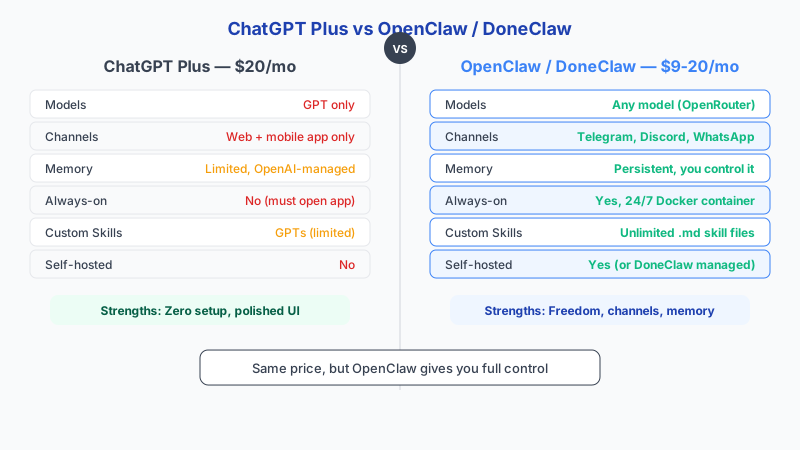
1. Feature-by-Feature Comparison
The differences between OpenClaw and ChatGPT are architectural, not just cosmetic. Here is what each platform actually provides across the features that matter for daily use.
ChatGPT Plus costs $20 per month and includes GPT-4o, GPT-5, and o3 access. Current limits: 3,000 messages per week on GPT-5.2, 160 messages per 3 hours during peak times, 80 file uploads per 3 hours, and a 512MB max file size. Teams pricing is $25 per user per month on annual billing, while Enterprise runs roughly $60+ per user per month and adds SOC 2 compliance, SAML SSO, and zero data retention.
Feature Comparison:
┌─────────────────────┬──────────────────────────────────┬─────────────────────────────┐
│ Feature             │ OpenClaw (self-hosted)           │ ChatGPT Plus                │
├─────────────────────┼──────────────────────────────────┼─────────────────────────────┤
│ Memory              │ Files on disk, persistent        │ Session-based, limited      │
│                     │ across restarts, unlimited        │ memory feature (opt-in)     │
│                     │ storage in Docker volume          │                             │
├─────────────────────┼──────────────────────────────────┼─────────────────────────────┤
│ Channels            │ Telegram, Discord, WhatsApp,     │ Web app, mobile app,        │
│                     │ email, webhooks                   │ API (separate billing)      │
├─────────────────────┼──────────────────────────────────┼─────────────────────────────┤
│ Scheduling          │ Cron jobs, heartbeats,           │ None — requires manual      │
│                     │ timed skills                      │ interaction each time       │
├─────────────────────┼──────────────────────────────────┼─────────────────────────────┤
│ Model choice        │ Any OpenRouter model:            │ GPT-4o, GPT-4o mini,        │
│                     │ Claude, Gemini, Llama,           │ o1 (OpenAI models only)     │
│                     │ DeepSeek, MiniMax, etc.          │                             │
├─────────────────────┼──────────────────────────────────┼─────────────────────────────┤
│ Monthly cost        │ Self-hosted: $8-15/mo + API      │ $20/mo fixed (Plus)         │
│                     │ Managed (DoneClaw): $19.99/mo    │ $200/mo (Pro)               │
├─────────────────────┼──────────────────────────────────┼─────────────────────────────┤
│ Data location       │ Your server or DoneClaw          │ OpenAI servers (US)         │
│                     │ container (you control it)        │                             │
├─────────────────────┼──────────────────────────────────┼─────────────────────────────┤
│ Custom tools        │ Skills, file access, APIs,       │ GPTs with limited           │
│                     │ shell commands, webhooks          │ action/browsing support     │
├─────────────────────┼──────────────────────────────────┼─────────────────────────────┤
│ Always-on           │ Yes — runs 24/7 in container     │ No — only active when       │
│                     │                                   │ you have the tab open       │
└─────────────────────┴──────────────────────────────────┴─────────────────────────────┘
2. Memory: Persistent Files vs Session Context
ChatGPT remembers things within a conversation, and has a limited "memory" feature that stores short facts across sessions. But it cannot store structured data, reference files from last week, or maintain a running project log. When you start a new chat, the context is shallow.
OpenClaw stores memory as files in a Docker volume. Your conversation history, extracted facts, project notes, and skill outputs persist across restarts and are available to every future conversation. You can SSH into the container and read the memory files directly. This means your agent can reference a meeting summary from three weeks ago or track a habit over months without re-explaining anything.
The practical difference: after using ChatGPT for two weeks, it knows almost nothing about your ongoing work. After using OpenClaw for two weeks, it has a detailed understanding of your projects, preferences, and communication patterns.
ChatGPT offers two memory mechanisms: Saved Memories (explicit facts you tell it to remember) and Chat History (automatic context within a conversation). The free tier only provides short-term session memory. Plus subscribers get persistent memory across conversations, but it is limited to short extracted facts rather than full document storage or structured data.
Try DoneClaw free for 7 days — cancel anytime
Full access during your trial. No credit card charged until day 8. Cancel from the Stripe portal with one click.
Try Free for 7 Days3. Scheduling and Autonomous Behavior
ChatGPT does nothing when you are not talking to it. It cannot check your email at 8am, send you a daily briefing, or monitor a website for changes. Every interaction requires you to open the app and type a prompt.
OpenClaw runs cron jobs, responds to webhooks, and executes scheduled skills without any manual trigger. A morning briefing skill runs at 7am and sends results to your Telegram. A health check pings your services every 5 minutes. A weekly report compiles data every Friday. This autonomous behavior is the core difference between a chatbot and an agent.
# Things OpenClaw can do that ChatGPT cannot:

# Send a daily briefing to Telegram at 7am
0 7 * * * docker exec openclaw-agent node /app/openclaw.mjs run-skill daily-briefing

# Check server health every 5 minutes
*/5 * * * * curl -sf http://localhost:18789/health || echo "Agent down" | notify

# Weekly expense report every Friday at 6pm
0 18 * * 5 docker exec openclaw-agent node /app/openclaw.mjs run-skill weekly-expenses
4. Cost: Pay-per-Token vs Fixed Subscription
ChatGPT Plus costs $20/month for a fixed set of models and features. You get rate-limited access to GPT-4o and cannot choose cheaper models for simple tasks. Heavy users hit usage caps.
OpenClaw self-hosted costs $5-10/month for a VPS plus API usage. With Gemini Flash as your default model, API costs are typically $1-5/month for moderate use. Total: $6-15/month for unlimited usage with no rate limits. With managed DoneClaw hosting, the total is $19.99/month including infrastructure.
The cost advantage of OpenClaw is largest for users who send many messages but do not need a premium model for every one. Routing 90% of messages to a $0.10/M model and 10% to a $3/M model costs far less than paying $20/month for ChatGPT Plus.
API cost comparison: 50 daily GPT-4o API messages costs approximately $8-12 per month, which is cheaper than the $20 ChatGPT Plus subscription for moderate usage. The break-even point is around 80-100 messages per day. Below that, the API route through OpenClaw is cheaper. Above that, Plus may offer better value if you exclusively use OpenAI models, but OpenClaw still wins when you route most messages to cheaper models.
5. When to Use Each: Three Scenarios
Scenario 1: You need a quick answer to a one-off question. Use ChatGPT. It is faster to open a browser tab than to configure an agent. OpenClaw is overkill for ad-hoc questions you will never revisit.
Scenario 2: You want an assistant that knows your projects and runs daily automations. Use OpenClaw. The persistent memory and cron jobs give you a system that works for you even when you are not interacting with it. ChatGPT cannot do this.
Scenario 3: You handle sensitive data (medical records, financial data, client information). Use OpenClaw self-hosted with a local model via Ollama. Nothing leaves your machine. ChatGPT sends everything to OpenAI servers, which may not meet your compliance requirements.
Conclusion
ChatGPT is a polished chat interface for quick interactions. OpenClaw is a persistent agent system that remembers, schedules, and acts autonomously. Choose ChatGPT for casual use. Choose OpenClaw when you need ongoing memory, multi-channel access, scheduled automations, or control over where your data lives.
Skip the setup? DoneClaw deploys OpenClaw for you — $29/mo with 7-day free trial, zero configuration.
Try DoneClaw free for 7 days — cancel anytime
Full access during your trial. No credit card charged until day 8. Cancel from the Stripe portal with one click.
Try Free for 7 DaysFrequently asked questions
Can I use OpenAI models inside OpenClaw?
Yes. OpenClaw routes requests through OpenRouter, which supports GPT-4o and other OpenAI models. You get the same model quality with added memory persistence and channel integrations.
Is ChatGPT easier to set up?
Yes. ChatGPT requires only a browser and a subscription. OpenClaw self-hosted requires Docker and basic server knowledge. Managed DoneClaw reduces setup to a few minutes but still requires configuring a bot token.
Can OpenClaw replace ChatGPT completely?
For ongoing projects and automations, yes. For quick one-off questions where you do not need memory or scheduling, ChatGPT is simpler. Many users keep both: ChatGPT for throwaway questions, OpenClaw for everything they want to persist.